Greatness of Spirit in Light of the Gospel
In a generation marked by passivity, the gospel continues to call men and women to courage, perseverance, faithfulness, and noble character.

In times of passivity and weakness, the church once again needs great-hearted Christians: men and women whose greatness of spirit flows from the gospel of Jesus Christ.
The word magnanimity may sound unfamiliar today. Nevertheless, it describes a kind of Christian character that remains deeply necessary. A magnanimous Christian is willing to serve, persevere, face difficulty, and pursue what is truly valuable.
Moreover, Christian magnanimity does not mean pride, ambition, or a desire for recognition. On the contrary, it describes a willingness to act with courage, generosity, patience, and faithfulness for the good of others and for the glory of God.
Therefore, to understand this virtue more clearly, we can return to the eighteenth century and consider the teaching of Presbyterian pastor and educator John Witherspoon.
John Witherspoon and Christian Magnanimity
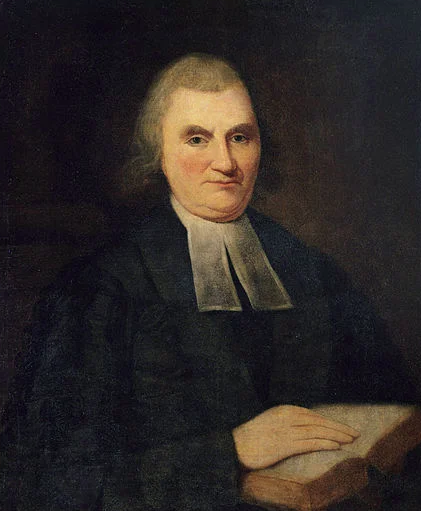 1723 — 1794
 Presbyterian pastor, educator, president of Princeton, and an important figure in early American history. His teaching on Christian magnanimity continues to challenge believers to pursue courage and faithfulness.
A pastor preparing a new generation
John Witherspoon (1723–1794) was a farmer, Presbyterian pastor, educator, and one of the Founding Fathers of the United States. In addition, he served as president of Princeton from 1768 until 1794.
In September 1775, Witherspoon preached a sermon entitled Christian Magnanimity to students who were preparing to graduate and enter their professional lives.
Therefore, Witherspoon was not merely discussing an abstract virtue. He was preparing young Christians to face real responsibilities, difficulties, dangers, and decisions with a character shaped by their faith.
In this sense, Christian magnanimity should become visible in work, service, relationships, perseverance, and the way believers respond to suffering.
What Does It Mean to Be a Great-Hearted Christian?
Magnanimity is not a word we hear every day. Indeed, it may describe a virtue that modern society no longer values as highly as it once did.
Magnanimity is greatness of spirit, dignity of mind, generosity, courage, and nobility of character.
Greatness of spirit without pride
A great-hearted person does not live solely for personal interests. Instead, such a person is willing to act generously and courageously for the good of others and in pursuit of a greater purpose.
For Witherspoon, magnanimity represented a form of true greatness. However, from a Christian perspective, this greatness cannot be separated from humility before God.
Therefore, Christian magnanimity is not self-glorification. Rather, it is strength of character placed in the service of Christ.
Five principles of magnanimity
Undertake great and difficult tasks
First, Christians should not automatically run from difficult responsibilities. Faithfulness sometimes requires courage and sacrifice.
Pursue what is truly valuable
Furthermore, Christian magnanimity teaches us to distinguish between what merely appears important and what possesses lasting value.
Face danger with resolution
Likewise, difficulties should not determine our convictions. Faith gives believers strength to continue obeying God.
Persevere through difficulties
Consequently, magnanimity becomes visible when Christians remain faithful even when the journey is difficult and long.
Endure suffering with patience
Finally, greatness of spirit also includes patience, endurance, and steadfastness in the midst of suffering.
How the Gospel Transforms Christian Magnanimity
Witherspoon argued that Christianity reveals the true beauty and usefulness of magnanimity. The gospel does more than teach admirable virtues; it transforms our motivations, hopes, ambitions, and priorities.
The gospel changes our ambitions
First, the gospel redefines what we consider valuable. Therefore, Christians are not called to live primarily for recognition, comfort, status, or personal success.
Instead, we learn to desire what glorifies God and serves our neighbor. As a result, Christian greatness looks very different from worldly greatness.
The gospel calls us to noble service in both public and private life. Moreover, it gives us courage to face danger, strength to persevere, and hope when suffering enters our lives.
Most importantly, the suffering of Jesus Christ on earth and on the cross becomes the supreme encouragement for Christians who must endure suffering.
Christian magnanimity does not merely ask, “What is best for me?” Instead, it asks, “How can I glorify God and faithfully serve where He has placed me?”
Why We Need Great-Hearted Christians Today
In times of deep passivity and spiritual weakness, we need great-hearted Christians.
We need Christians whose primary motivation is to live in light of the gospel and share the message of Christ’s love with the people around them.
Furthermore, we need men and women who allow the Word of God to shape their schedules, relationships, desires, thoughts, and priorities.
A faith that reaches every part of life
Christian magnanimity does not appear only in extraordinary moments. On the contrary, it becomes visible through everyday faithfulness.
In our priorities
Christian faith should influence how we use our time, make decisions, and order our lives.
In our relationships
Moreover, Christian greatness appears when we stop living only for ourselves and learn to serve others generously.
In our difficulties
Although suffering and opposition may come, our hope remains secure in Christ. Therefore, we can persevere with courage.
In our purpose
Ultimately, our highest goal is not personal greatness, but the glory of God in every area of life.
Living for the Glory of God
A Life Worthy of Our Calling
Great-hearted Christians are not people who seek recognition or greatness for themselves. Rather, they are people whose lives have been shaped by the gospel and whose highest desire is to glorify God.
Therefore, when they face great responsibilities, danger, difficulty, or suffering, they remain steadfast because their hope rests in Christ.
We need Christians who seek to live in a manner worthy of their calling. We need believers who desire to glorify God in every area and circumstance of life and who are not easily shaken by the difficulties they face.
Ultimately, Christian magnanimity is expressed through a life that serves, perseveres, remains faithful, and looks forward to the approval of Christ.
“Well done, good and faithful servant. You have been faithful over a little; I will set you over much. Enter into the joy of your master.”
Matthew 25:21
May the Lord raise up in His church men and women marked by spiritual greatness, courage, faithfulness, perseverance, and wholehearted devotion to the glory of God.
In Christ’s love,
Rev. Jader Santos